Being a Missouri alum, what I’m about to do stings a little, but when it comes to people in the same profession, sometimes you have to stick up for those that share your passions. In this case, I’m talking about Blake Schuster, a Kansas junior and sports writer for the school paper, and Charlie Weis, the Kansas head football coach. Continue reading
Tag Archives: University of Kansas
What We Learned…Week Two
- Utah State broke a 12 game losing streak to in-state rival Utah. The Aggies hadn’t beaten Utah since 1997, and not in Logan since 1996.
- With it’s win over UConn, NC State is now 9-1 in weeks after a loss, ranging back to 2010
- Minnesota scored 16 points in the first quarter against New Hampshire. The Golden Gophers hadn’t scored that many points in the opening quarter since 2005 (20 points vs Florida Atlantic). Last season, Minnesota only scored more points once all last season (20 points in second quarter of season finale against Illinois.
- The last Ohio State quarterback to rush for three touchdowns in a game was Art Schlichter against Illinois in 1978. Braxton Miller did it Saturday.
- Penn State starts 0-2 for first time since 2001 and just the 5th time in the last 45 years.
- Before Sam Ficken went 1-for-5 on field goals for Penn State, the last player to miss four-or-more FG in one game was Josh Zahn of UAB. Zahn was 2-for-7 at Tennessee on 9/25/2010.
- Auburn “accumulated” -2 pass yards in the first half at Mississippi State. The Tigers are the second team this season to have negative pass yards in a half; Northern Illinois netted -1 pass yard in the second half vs Iowa last weekend. The Tigers last had negative pass yards in a half in 2005, when they had -2 pass yards in the second half vs Alabama.
- Mississippi State’s win included numerous firsts. The victory broke a string of unsavory trends for the Bulldogs. They had lost 10 out of the last 11 against Auburn — including four straight — and hadn’t won an SEC opener since 1999. It was also coach Dan Mullen’s first victory against the SEC Western Division’s best four teams. He was 0-12 combined against Alabama, LSU, Arkansas and Auburn until Saturday’s breakthrough.
- Miami started playing games in 1926, but Saturday’s loss was just the sixth time that the U ever allowed 50 points in a game.
- Collin Klein now has 5 career games with at least 3 rush TD and 1 pass TD. Since 2000, that is the most of any FBS player.
- Marcus Lattimore records his 33rd career TD (30 Rush, 3 Rec), tying the school record by George Rogers and Harold Green. He has played in only 22 games.
- Clemson’s DeAndre Hopkins is the first player this season with three receiving touchdowns in a game this season, and he did it before halftime. The last player with three receiving touchdowns in a half? West Virginia’s Tavon Austin, who did so in the first half against Clemson in the Orange Bowl.
- Second straight year the Sacramento State Hornets have beaten a Pac-12 opponent on the road in the last play of the game. They defeated Oregon State last season.
- Through two games this season, Notre Dame has turned the ball over just twice, eight fewer than the 10 turnovers the Irish committed at this point last season.
- Denard Robinson finished with his 3rd career game with at least 200 yards passing and 200 yards rushing. That’s the most of any FBS player since 2000.. one more than Vince Young had.
- Denard Robinson is the 4th player in FBS this season with multiple 50-yd Rush TD in the same game, joining Duke Johnson, Davon Johnson, and Johnathan Franklin. He is the only Michigan player to do it since at least 2004. Robinson’s longest run in Week 1 against Alabama was 9\nine yards.
- Denard Robinson now has three career rushing TD of at least 70 yards. That is tied for the most among all active FBS players.
- Matt Barkley passed for 187 yards and 6 TD, becoming the first FBS player since at least 2000 to have 6+ pass TD and fewer than 200 passing yards in a game.
- If it seems that no lead is safe in college football, the schools on this list can surely relate. Texas A&M, Memphis, Kansas and Nevada all blew halftime leads on Saturday and are among the the teams that have seen the most halftime leads evaporate since the start of the 2011 season.
- Florida stepped up its defense after halftime Saturday. Texas A&M averaged 5.8 yards per play in the first half with 28.3 percent of its plays gaining 10 yards or more. In the second half, the Aggies averaged 2.8 yards per play, and managed just one play that gained 10 yards or more. All six of Texas A&M’s second-half drives ended in punts, including four “3 & outs.” The Aggies had no punts in the first half.
- For a second straight week, Michigan State held an opponent without an offensive touchdown. The only two touchdowns the Spartans have allowed this season have some on interception returns.
- Iowa State beat Iowa 9-6 for its first win in Iowa City in 10 years.
- This was Iowa’s first loss under Kirk Ferentz when they held a team to fewer than 10 points. Before today, they had been 33-0 in such games. Iowa State didn’t score in the second half.
- Wisconsin’s last regular season non-conference loss came in 2003 at home against UNLV. It’s last regular season non-conference ROAD loss came in 2001 at Oregon.
- With Wisconsin’s, Nebraska’s and Illinois’ losses to Pac-12 teams, Big Ten schools are 5-26-1 at Pac-12 schools since 1993 (the year Penn State joined the Big Ten).
- After showing some signs of rust last week in a 35-21 victory over North Carolina State, Jimmy Hunter caught three touchdowns — the first time since 2003 that a Tennessee receiver ended up with that many in a single game.
- Tennessee exceeded the 500-yard mark in total offense for a second straight week. The Vols hadn’t gained 500 yards in back-to-back games since 2000.
- The win is Louisiana-Monroe’s first over a ranked team since joining the FBS in 1994, and it is the school’s first over an SEC team since defeating Alabama in 2007. The Warhawks are 4-34 against the SEC, with their only other win coming against Mississippi State in 1995.
- It is also the Sun Belt Conference’s first win over a top 10 team.
- Six players ran for touchdowns as Georgia Tech (1-1) had 712 total yards, the second-highest total in school history, including 469 yards rushing. The Yellow Jackets had a school-record 768 yards in a 66-24 rout of Kansas in 2011.
- LSU has won 39 straight against non-conference opponents in the regular season, tying a Football Bowl Subdivision record first set by Kansas State. Next weekend, the Tigers play Idaho, another non-conference opponent, and the game is at home, where LSU has won 19 straight.
- Mississippi defeated Texas-El Paso 28-10, improving to 2-0 for only the second time in 10 seasons.
- The Bowling Green Falcons improved to 4-0 in season openers under head coach Dave Clawson.
- The Ohio Bobcats (2-0), who opened with a win over Penn State, have won eight of nine dating back to last season.
- Damien Williams’ rushing total of 156 yards was the most for a player in his first game at the Sooners’ home field, and he became only the fourth player at the school to eclipse 100 yards rushing in each of his first two games. Adrian Peterson was the last to do it, in 2004.
- Casey Pachall and Trevone Boykin combined to complete all 17 passes for TCU — the most in FBS history without an incompletion.
- Gary Patterson was presented a crystal ball in recognition of his 110th career victory — one more than former school-record holder Dutch Meyer, who led the Frogs to their only AP national championship in 1938. Patterson is 110-30 overall with 10 shutout victories one game into his 12th season.
- Houston and Louisiana Tech combined for 1,291 yards of offense and 78 first downs in a game that lasted four hours and eight minutes.
- SMU intercepted seven passes and recovered two fumbles by Stephen F. Austin.
- Northern Arizona’s win over UNLV was Northern Arizona’s (1-1) first win over an FBS team in 25 years.
- Oklahoma State freshman Wes Lunt threw for 436 yards, fourth-most in school history and the Big 12 record for a freshman, and connected with Tracy Moore for four touchdown passes
>Rivalry Week Part 1
>The last couple of weeks of the college football season always brings us some of the nation’s top rivalries, and that is the case again this year. There is a minimum of 13 rivalry games this weekend, highlighted by Missouri-Kansas, Texas-Texas A&M, Ohio State-Michigan and . Here’s a look at some, if not all, of them.
Texas-Texas A&M
This is the first time the teams have met without Texas (5-6, 2-5) ranked in the Top 25 since 1998, when the Longhorns defeated the then-No. 6 Aggies 26-24 on a late field goal. The Aggies started the season sluggishly, but have won five straight, pushing them into the top 20 in the country. The Longhorns were unable to recover from theirs and need a win to avoid missing a bowl game for the first time since 1997 — also the last time they had a losing season.
The football series between the two universities is the third longest running rivalry in all of college football. Since 1900, the last regular season football game is usually reserved for their matchup. Each school mentions the other in their fight song (Texas with “and it’s goodbye to A&M” in Texas Fight and the Aggies singing about Texas for essentially the entire second verse of the Aggie War Hymn). In the past, mischief has preceded the annual game, such as “kidnapping” each other’s mascots. The Longhorns lead the series 75-36-5.
Auburn-Alabama
The Iron Bowl is a common name for the college football game between the Auburn University Tigers and the University of Alabama Crimson Tide. Auburn and Alabama played their first football game in Lakeview Park in Birmingham, Alabama, on February 22, 1893. Disagreement between the schools began immediately as Alabama considered the game to be the final matchup of the 1892 season and Auburn recorded it as the first of 1893. The series was indeed suspended after the 1907 game when the schools could not come to agreement over the amount of expenses to be paid players, as well as from where officials for the game should be obtained.
In 1947 the Alabama House of Representatives passed a resolution encouraging the schools to “make possible the inauguration of a full athletic program between the two schools.” Ralph B. Draughon, the president of Auburn (then named the Alabama Polytechnic Institute), and Alabama president John Gallalee decided during the winter and spring of 1948 to end the disagreement and renew the series. The games would be played in Birmingham because it had the largest stadium in the state, 44,000-seat Legion Field, and the tickets would be split evenly between the two schools. Alabama won the first game when the series renewed 55–0, the most lopsided victory of the series.
Auburn desired to make the Iron Bowl a “home-and-home” series, and the schools reached an agreement where Auburn could play their home games for the Iron Bowl in Auburn starting in 1989 (except for the 1991 game, which was played at Legion Field), and Alabama would have a “home” ticket allocation for games in Legion Field. Since 1893, the Crimson Tide and Tigers have played 74 times. Alabama leads the all-time series, with 40 wins to Auburn’s 33, with one tie. The game has been played in four cities: Auburn, Birmingham, Montgomery, and Tuscaloosa. Alabama leads the series in Birmingham (34–18–1). Auburn leads the series in Tuscaloosa (6–1–0) and Auburn (7–3–0). The series is tied in Montgomery (2–2–0).
Kansas-Missouri
The intense rivalry between the two universities can be traced to the open violence involving anti-slavery and pro-slavery elements that took place in the Kansas Territory and the western frontier towns of Missouri throughout the 1850s. These incidents were attempts by Missouri (a slave state) to influence whether Kansas would enter the Union as a free or slave state. The term Bleeding Kansas is often used to refer to the pre-war conflict, culminating with the burning and looting of Osceola, Missouri in 1861 by James Lane’s Kansas Jayhawkers, which was a contributing factor to the Lawrence Massacre reprisal two years later. The raid on Lawrence was led by William Quantrill, a Kansas citizen who had actually taught school in Lawrence prior to the Civil War. SI.com supervising producer Dan George summed up the rivalry by stating “It’s more than the schools — it’s a state thing going back to before the Civil War, when William Quantrill’s Confederate guerillas burned Lawrence and murdered nearly 200 people. Neither Missouri nor Kansas folks have forgotten it.” Those on the Missouri side are quick to point out that the Jayhawkers were guilty of the same things – crossing into Missouri, leading brutal raids and burning towns, and that Quantrill was part of a group that almost burnt down Columbia due to it being a Union stronghold.
The 2007 football season brought the origins of the rivalry between the two states back into the spotlight. A t-shirt created by a Missouri alumnus gained national attention with its reference to Quantrill’s Raid of 1863. The shirt depicted the burning of Lawrence in 1863 following the raid of William Quantrill and his Bushwhackers against the Jayhawkers of Kansas. The image of Lawrence burning was paired with the word “Scoreboard” and a Mizzou logo. On the back of the shirts, William Quantrill was quoted, saying “Our cause is just, our enemies many.” Some Kansas fans interpreted these shirts as supporting slavery. KU supporters returned fire with a shirt depicting abolitionist John Brown with the words, “Kansas: Protecting America from Missouri since 1854.”
The Missouri-Kansas football series is the second-most-played rivalry in college football history. The teams first matched up in football on October 31, 1891. There have been 9 ties in the 118 games played. On November 24, 2007, the two teams entered the game both ranked in the top five in the nation: Kansas at #2 and Missouri at #3. On the heels of #1 LSU’s loss the day before, Missouri won the game 36-28 at Arrowhead Stadium in Kansas City, with a near-record 80,537 people (the second-largest crowd in stadium history) in attendance and the largest TV audience to watch any 2007 regular season game, and therefore became #1 in both the Bowl Championship Series and Associated Press polls.
Although 55-54-9 for MU is the official series result, there is an ongoing discussion about whether the 1960 games should have been counted as a win for Kansas, making the series 55-54-9 in their favor. The Big 8 forfeited the win to Missouri due to Kansas’ ineligible player, Bert Coan. The University of Kansas still considers the game a Kansas win, fueling the controversy. Due to the Kansas win on the field, several other publications have also referenced the series record more to the favor of Kansas.
>College Football Previews: Kansas
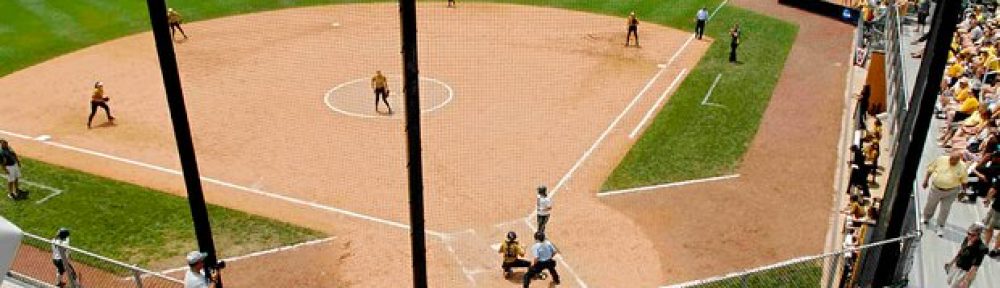
> Two years after going 12-1 and getting an Orange Bowl win over Virginia Tech, the Jayhawks are looking to rebuild under new coach Turner Gill, who takes over for Mark Mangino after Mangino resigned amid mistreatment rumors. Gill comes from Buffalo after having turned one of the worst teams in college football into a conference champion.
Offense – Despite returning eight starters, it may be the four that they lost that will be the most crucial. Gill will have to replace departed seniors quarterback Todd Reesing, wide receivers Dezmon Briscoe and Kerry Meier and running back Jake Sharp. It will be interesting to see how the team responds to Chuck Long’s scheme.
The loss of Reesing hurts the Jayhawks the most. Reesing threw for 3,616 yards on his way to breaking numerous school passing records. He leaves Kansas as the school leader in career passing yards (11,194), career attempts (1,461), career completions (932), career touchdown passes (90) and total offensive yards (11,840). The returnees, however, only threw for a combined 38 yards in 2009. That’s not to say that there won’t be any depth at the position tho. Kale Pick was four of five passing for 22 yards, while adding 167 rushing yards on 14 carries as a backup in 2009. Quinn Mecham is a junior college transfer who threw for 3,091 yards and 40 touchdowns at Snow Junior College in 2009. He is already on campus and will participate in spring practice. A trio of quarterbacks redshirted as freshmen in 2009 including Christian Matthews, Jacob Morse and Jordan Webb.
Toben Opurum led the team in rushing as a freshman, rushing for 554 yards and nine touchdowns in 2009. Rell Lewis saw limited time running for 72 yards on 13 carries. Angus Quigley, a running back at KU until playing linebacker last season, returns to his original position after gaining a medical hardship. Quigley ran for 309 yards in 2008.
The Jayhawks lost the two most productive wide receivers in school history in Dezmon Briscoe, who declared for the NFL draft after his junior campaign, and Kerry Meier. In 2009, Briscoe caught 84 passes for 1,337 yards and nine touchdowns, while Meier pulled in 102 balls for 985 yards and eight scores. Johnathan Wilson had been the third option in his career and pulled in 35 receptions for 449 yards in 2009. Bradley McDougald started six games as the fourth wide receiver and caught 33 passes for 318 yards last year. Tertavian Ingram saw action a year ago and had two catches. Daymond Patterson, D.J. Beshears, Erick McGriff and Chris Omigie ,a pair of redshirt freshmen all could make an impact.
Defense – A mix of experience and youth returns on the defensive side of the ball for Kansas, including seven starters. Among the returnees are All-Big 12 Honorable Mention players in defensive end Jake Laptad and linebacker Drew Dudley. Linebacker Huldon Tharp and safety Lubbock Smith earned Freshman All-America honors in 2009. Chris Harris has been a regular in the secondary for the past three seasons. In all, five of the top eight tackle leaders from 2009 return.
All-Big 12 Honorable Mention players in defensive end Jake Laptad had 49 tackles, including a team-high 12 for loss and six and a half sacks. Quinton Woods, who saw limited time with four tackles, is the only other end with experience. Inside, John Williams started the final seven games of 2009 at tackle after moving from the offensive line. He replaced Richard Johnson in the starting lineup, but Johnson returns this season as well.
Last season Kansas used two linebackers in its 4-2-5 alignment and two of the main three players in last year’s rotation return. Drew Dudley was second on the team with 88 tackles last year, while Huldon Tharp made 59 stops as a true freshman en route to earning some Freshman All-America honors. Justin Springer has been a key reserve and last year had 25 tackles.
The 2009 secondary was a team effort as 10 different players started games during the season. KU lost two long-time regular safeties in Darrell Stuckey, who led the team with 93 tackles, and Justin Thornton, who registered 80 tackles in 2009. Chris Harris leads the returnees. Harris has played safety and cornerback in his career and last year was third on the team with 84 tackles, while leading the team with nine passes broken up.
Recruiting – The Jayhawks signed a class of 18 in 2010, including 10 on the offensive side of the ball. Of those 10, four are wide receivers. Of the eight defenders, four are on the line. Kansas was able to pull Brandon Bourbon out of Missouri and boy did they get a player. On his way to being named the 3A Player of the Year, he amassed a school record 2,531 yards and 34 touchdowns. He finished his high school career with 5,551 rushing yards. On defense, the stud is linebacker Ed Fink. He registered 149 tackles and eight sacks as a senior.
Schedule – This year’s schedule is relatively tougher than last year’s as two of their four nonconference opponents qualified for bowls, including a BCS bowl game. Three of the team’s nonconference games are in Lawrence, as North Dakota State and Georgia Tech come to Lawrence, before the Jayhawks

