Mia Krone started out her childhood as a hockey player, playing all over the North Shore. But by the time she hit 11, hockey wasn’t fun for her anymore — she was looking for a new challenge.
“My dad took me to the Evanston club and had me watch [speedskating] practice,” Krone said. “Because I knew how to skate, they gave me some speed skates and put me on the ice. At the time, Shani Davis was coaching on the ice so he was my first coach and got me hooked on the sport.”
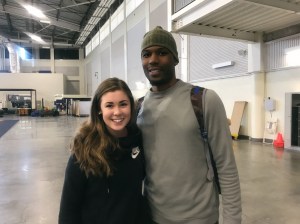
Davis, a Chicago native, won the gold medal in the 1000-meter at the 2006 and 2010 Olympics and the silver medal in the 1500-meter in those same two Olympics.
“Just to be resilient,” said Krone, when asked about what advice she received from the Olympian. “With the sport comes a lot of different training and techniques, you have to be mentally focused and paying attention to detail. Just absorbing the detail and understand it, to put it in practice is the best advice I’ve gotten.”
The advice seems to have paid off, as the New Trier senior won the Junior A title at the U.S. Championships held March 17-19 in Midland, Mich.
The U.S. Nationals is an age-group competition with levels ranging from E to A. Junior E is for competitors ages 10-11 while Junior A, Krone’s age group, is for ages 17 and older. Krone has been competing at nationals since she was 13. Each time she moved up an age group, she had to hit a new time. Despite always finishing in the top six, she had never won the title.
Until this year.
“Winning the title was awesome,” Krone said. “It was also really great because my best friend won her age group, she’s a year younger than me and because she won and I won it made it that much more special.”
After starting her career with the Evanston North Shore Club, Krone now skates with the Glen Ellyn Speedskating Club and the Academy for Speedskating Excellence, a club based out of Milwaukee. Most practices last between an hour and a half to two and a half hours, with Glen Ellyn practicing on Tuesdays and Thursdays and the Milwaukee club on Wednesdays and Saturdays.
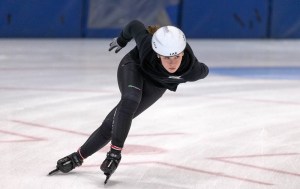
The speedskating season is broken up into two portions: training, which runs from May through September, and racing, which goes from September through March. Krone said she would normally compete in 10-15 events, but this year scaled it back to eight. Up until this year, she had only competed in national events, but expanded her reach to race internationally this year, something she said helped her see how others skated and helped improve her skills.
Competing in those events has also helped her develop new relationships and strengthen older ones.
“One of the best things [about speedskating] is the relationships I’ve formed and the friendships I formed,” Krone said. “Speedskating is such a small community that you compete against the same people over and over again. Because of that and because you train with them a lot of the time, you form a lot of close and unique friendships. The type of friendships where you’re best friends off the ice and catch up with one another every two weeks or whatever, but as soon as you’re on the ice, you’re competitive and can push one another and fight what you want.
“But as soon as you get off the ice, you’re back to friends. I think that’s one of the best things I’ve learned is to have those friendships and enjoy them, but not have them interrupt what you want to accomplish.”
The U.S. Nationals was the last event Krone will participate in her career, as she doesn’t plan on continuing the sport when she goes away to High Point University in North Carolina this fall. Despite hanging up her skates, Krone, who plans on studying biology on the pre-med track at High Point, hopes to give back to the sport in the future.
“I’d love to coach in the future, maybe not on the ice, but the sport has given me a lot and I want to give a lot back as well.”
 Michael Wojtychiw